
This morning marks a special time for me: the end of my last night shift in residency. This joins a growing list of “lasts” that I have been tracking including last OB call, last 24 hour shift, and last patient interview for my senior project.

As happy of an occasion as this is, I now have the challenge of transitioning back to a normal diurnal rhythm in just two days, before I start back on equally long and grueling day shifts. Can it be done?
Sleep: the final frontier
Residency is a time when little in our lives is under our own control, most especially not our schedule.
While this season of life presents some unique challenges to the circadian rhythm, it is not the first time I have struggled to get the quality and quantity of sleep that I need. Insomnia is a perpetual foe that pops into my life with the enthusiastic regularity of Kimmy Gibbler on Full House. My circadian rhythm has gone through more than its fair share of wear and tear when I had small babies, for example, or times in my life when I have been under immense stress. Or, similar to now, when I am forced by circumstance to work changing hours and shifts.
From night owl to morning lark
Unfortunately, I am not one who naturally adapts quickly to changes in my sleep schedule and even less one who thrives without getting plenty of sleep. Because both planned and unplanned changes to my sleep cycles are such a regular struggle for me, I have developed a system for dealing with them. Here are a few tips that help me to keep a steady circadian rhythm and get the sleep I need to thrive.
1. Create a restful environment

Manipulate your environment to be restful or wakeful, depending on the time. This can be done with dim, warm light, restful smells like lavender incense. Most important, make sure your bedroom is a calming and restful place by reserving your bed for sleep and romance. Read books instead of browsing social media or playing games to help your mind wind down. However you find your chill, roll with it.
2. Embrace better living through ancient chemistry

I am currently taking ashwaganda, melatonin, and a big cup of chamomile tea before bedtime. Valerian capsules are my backup for sleep when these don’t work. In addition, I avoid natural stimulants such as spicy foods in the hours before I try to sleep.
3. Surround yourself with the right frequency
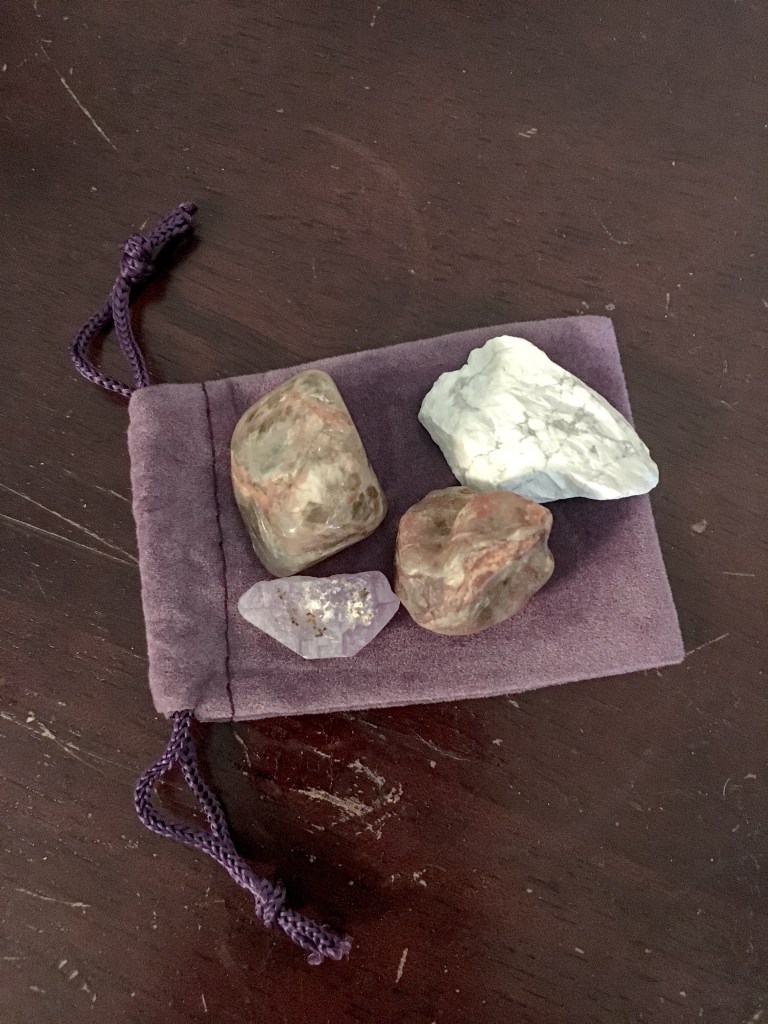
I use rocks and crystals to bring the energy I need to a variety of situations, including bedtime. There are so many rocks that can help you to rest that it’s hard to list them all. Charoite calms a racing mind, while sodalite and hematite bring the energy down a notch. Howlite and labradorite calm anxiety. Lapis lazuli helps to let go of thoughts about ambitions and work. Rose quartz calms emotions, while smoky quartz protects from nightmares. Choose 2-4 of your most relevant stones and place in a pouch under your pillow or on a bedside table. Limit your crystals in number because using too many of them can create a confused and muddied energy that may not help you.
4. Jump into mornings with both feet
Waking up is just as hard as falling asleep when you are retraining your sleep-wake cycles. I do the inverse of the suggestions above when it’s time to wake. Get your own internal chemistry on your side with yoga and bright light; keep crystals that support alertness and positive energy in the space you use to get ready for the day. Reach for a cup of green tea or coffee to give yourself a boost if needed.
Like night and day
Although it takes me a few days to return to a diurnal rhythm, it can be done with a few small changes and a minimal amount of self-discipline. It’s important to explore what works for you and develop your own sleep toolkit. This might be the last time I work a long chain of night shifts but it won’t be the last time I need help to sleep well.
 KidsCatsandFlannel