Ah the simple life. We moved to a backwoods area for the ease and relaxed living, only to find ourselves dealing with a new set of challenges. Challenges like constantly spreading blackberry bushes, various arachnids and hymenopterans that want to share our space, wildfires, and even an earthquake. Welcome to California, amirite?
Living in a rural area presents unique issues. A lack of access to affordable food is unfortunately a common predicament. My area is by definition a food desert as are many other rural zip codes. You can check here to see if there are any near you.
We actually have plenty of food in my area; it’s just not as affordable or convenient as many other places. My tiny tourist town has a lively local food culture, with uniformly amazing restaurants and food trucks. We have a small farmer’s market downtown once a week and also a lot of random pop-up stands where locals sell wares such as tamales, homemade jams, and local fruit. I get free range eggs at no cost from relatives and can purchase extra for $4 a dozen from a coworker. There are also two grocery markets: one “natural foods” store and one very small grocery chain store.
All of these options cost much more than I paid for groceries in the Seattle area, which is already one of the most expensive areas of the United States. Sometimes the quality and experience is worth it, but not always. I will pull out cash eagerly for locally baked artisanal bread but paying $6 for a small box of generic Cheerios at a chain grocery store is hardly the local flavor I’m seeking. One of the unfortunate facts of living in a rural area – and even more so a rural area fueled by tourism – is that even basics are in short supply and therefore cost a premium.
To be honest, I can afford to pay these prices as a physician, and in some cases I will. I love farmers markets and the whole experience of buying kettle corn or homemade jam from a table set up at the side of the road. These local resources are fun but cannot supply everything we need.
Because my family chooses to be as low waste as possible and to buy mainly cruelty-free local goods when possible, this whole eating thing could be a very haphazard and expensive endeavor if we did not come up with a plan. Until we have our own garden and chickens, our plan is to shop every two weeks in the nearest small city and use local resources in between trips.
Our food “rules”
Every family has a particular diet, from ‘meat and potatoes’ to vegan to the whole spectrum between. We are omnivores but we mainly eat a whole foods plant-based diet. We eat meat about three times a week, and approximately one serving of eggs or dairy every day. Although we are always trying to eat less animal products, our current level feels comfortable and healthy.
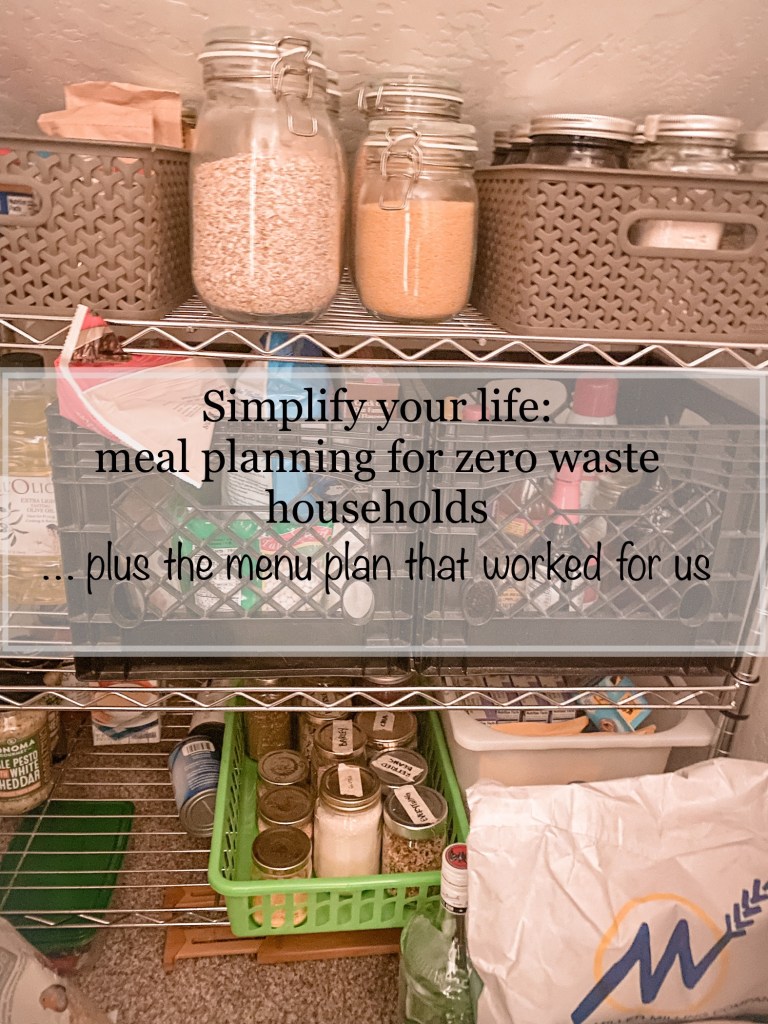
We are low waste and try to minimize non-reusable garbage when we choose groceries. We use bulk bins, butchers, cloth bags, and other strategies that help us to keep down plastic waste. We also try to eat local goods as much as possible to reduce the environmental impact of the transportation industry. This is a work in progress and sometimes not entirely possible. However, progress in this area remains one of our highest priorities in all shopping, including grocery shopping.
Ironically, eating local and low waste means using the local grocery market as little as possible. Their selection is mainly conventional choices that come from national suppliers, which means lots of plastic. Even basic foods are much more expensive than is practical for a family of our size. Our local natural foods store is a better value with eco-friendly choices so we will use it and the local farmers market to fill in the gaps as needed.
Eventually – in the very near future – we hope to produce a lot of our own food. We have already planted an amazing fall garden that should help us along. There is also a local CSA that was unfortunately full at the time we moved here. We plan to sign up this winter for the new growing season. These strategies will hopefully allow us to stock up in town less often in the future, perhaps once a month or less, while giving us the variety and the lower footprint we crave.
Making groceries last two weeks
I was initially reluctant to shop for two weeks of groceries at a time. Doesn’t food go bad much faster than that? How can I know what I’ll feel like eating next Wednesday? Can we even fit that much food in our vehicle? It just seemed like a lot to navigate for a family that completely fills a grocery cart or two in our normal weekly shopping.
Despite my misgivings, shopping less frequently is a necessity when we live so far from civilization. Here are a few tips for making this plan work for you.
Plan all meals and snacks. You will be buying an obscene amount of food so don’t plan on eyeballing portions. And don’t think you only need to plan your main meals. Late night snack is the most important meal of the day in our household so we plan for it in our meal plan, stocking up on bulk popcorn, cookie baking supplies, and ingredients for homemade froyo. Similarly we plan for 14 breakfasts and lunches over the two weeks to make sure we have more than enough food to last.
Buy a range of perishable and nonperishable foods. Eating a plant-based diet is possible even when you live far from a store. I meal plan to use up greens and perishable produce the first few days, hardier vegetables like broccoli and peppers toward the middle of the two week period, and then squash, sweet potatoes, cabbage, and other hardy vegetables toward the end. I also freeze broccoli, corn, spinach, and other vegetables that freeze well so we have variety even when fresh foods are running low. You can also buy frozen, but we don’t like all the plastic. Those last meals is the two weeks will soon be improving as our own garden starts producing.
Freeze or otherwise preserve foods for the last week. Most non-leafy vegetables can be blanched and frozen to preserve them. Although fruits don’t maintain their texture well when frozen, they are great for baking and smoothies. We also put all of our meat and most of our dairy in the freezer except what we plan to use in the next few days. This keeps everything fresh and reduces food waste.
Plan “use it up” meals. There are a lot of recipes like pizza and stir fry that can use almost any vegetable. If you plan these meals periodically, you’ll easily use up your vegetables before they go bad. You’ll notice a lot of homemade pizzas, curries, and other flexible dishes on our menu.
Shop at a variety of stores. It’s easy to get in a rut when you are planning for such a long period of time. However, shopping at different stores will help you to have a varied pantry and to get the best possible deals on everything you buy. Our current plan is to go to the Grocery Outlet and Costco around the first of the month and then to the Natural Foods Co-op and Winco around the middle of the month. We are also looking for Latin and Asian foods stores to add to the rotation.
Maximize home food production. Because we have so much space, we can fill in a lot of dietary gaps with a large garden. We have already planted late summer cucumbers and a variety of herbs. We just bought seeds for spinach, arugula, and bok choy – my family’s necessities – which will arrive any day. We are making maximum use of the blackberry bushes that surround my home and plan to find ways to add crab apples to our diet as soon as the ones in our yard are ripe.
Re-evaluate your food supply twice a week. I eyeball my produce and perishables about twice a week so I can freeze anything that is not looking as fresh before it goes completely bad.
Choose scratch foods when possible. Ingredients generally require less storage space and spoil more slowly than the recipes they create. For example, flour and yeast do not go bad as quickly as bread. Making items from scratch as needed will ensure that you have fresh baked goods and snacks even when you haven’t shopped in weeks.
Stash away snacks and bread. No matter how many snacks I buy, my kids will eat all of them in roughly 12 hours after they cross our doorstep. We keep a bin hidden in the house with snacks to bring out later. We also stash half of our bread and bagels in the freezer so we can take them out and enjoy during the second week.
Our two week menu plan in action
Our current meal plan includes easy summer breakfasts (bulk yogurt, cold cereals, hot cereals, fruit smoothies) and the occasional round of pancakes or muffins. We also bought a variety of breads, wraps, cheeses, condiments, and other easy lunch items. In general, buying these items in bulk will reduce the trash associated with them. We also choose paper or glass containers over plastic when there is a choice.
I’m sure you’re tired of reading, so here is the menu:
Breakfasts: four days cold cereal with milk (Kashi Blueberry Harvest, bulk coconut granola, and bulk mini-wheats); four days vanilla yogurt with berries and granola; four days bagels or toasts with avocado, honey, peanut butter, or jam; and two weekend days with a cooked brunch of biscuits and gravy, eggs, and hashbrowns. The pantry also has a variety of hot cereals, a box of pancake mix, and about five dozen eggs. We don’t assign particular breakfasts to particular days; everyone just grabs what they feel like every morning.
Lunches are mainly leftovers but we also bought ingredients for smoothie bowls, ramen, boxed mac and cheese, broccoli cheddar quiche, and sandwiches.
Snacks. This is the most important meal of the day for us. We bought popcorn and nutritional yeast; a case of Mary’s Super Seed crackers; several packages of granola bars, bulk yogurt pretzels, and lots of yogurt and fruit.
Of course the dinners are the main attraction and the area where most of our planning occurs.
Sunday: clean out the fridge day. This is the last chance for leftovers before we fill the refrigerator with new food. If the cupboard is bare, we grab a pizza or other easy food on the way home. Shopping and meal prep are quite the endeavor, so plan for an easy evening.
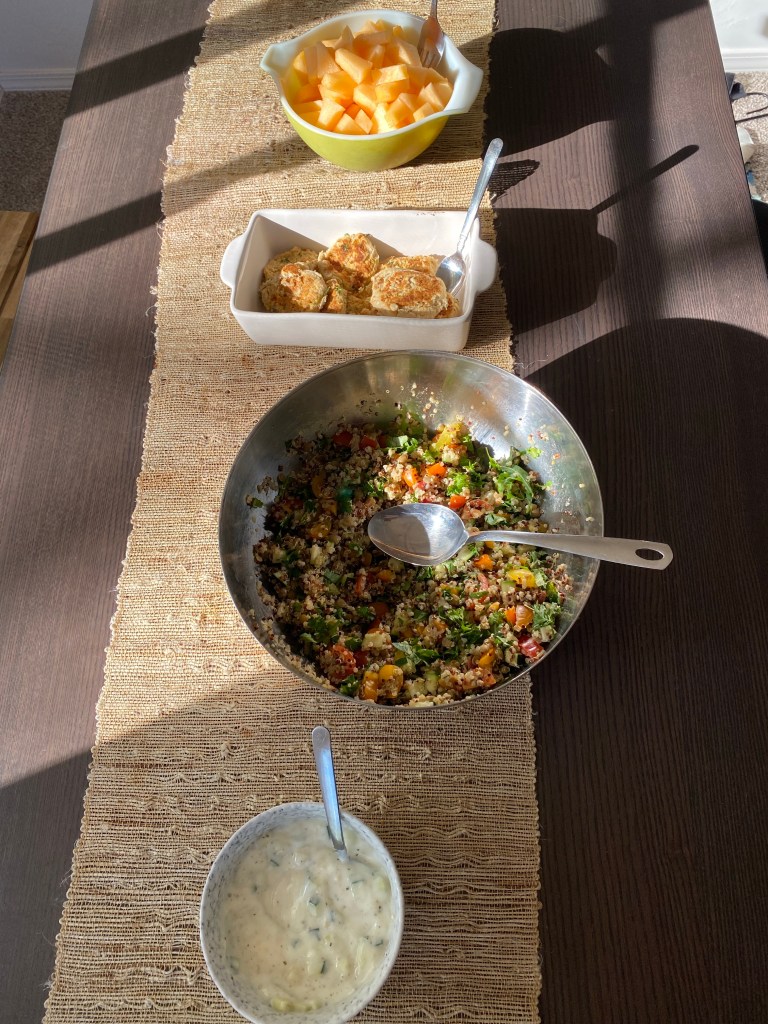
Monday: falafel with tahini sauce and quinoa tabbouleh. I can practically make falafel in my sleep because it is such a family favorite. The quinoa tabbouleh is a copycat of a salad we love from Costco and was also great for lunches throughout the week.
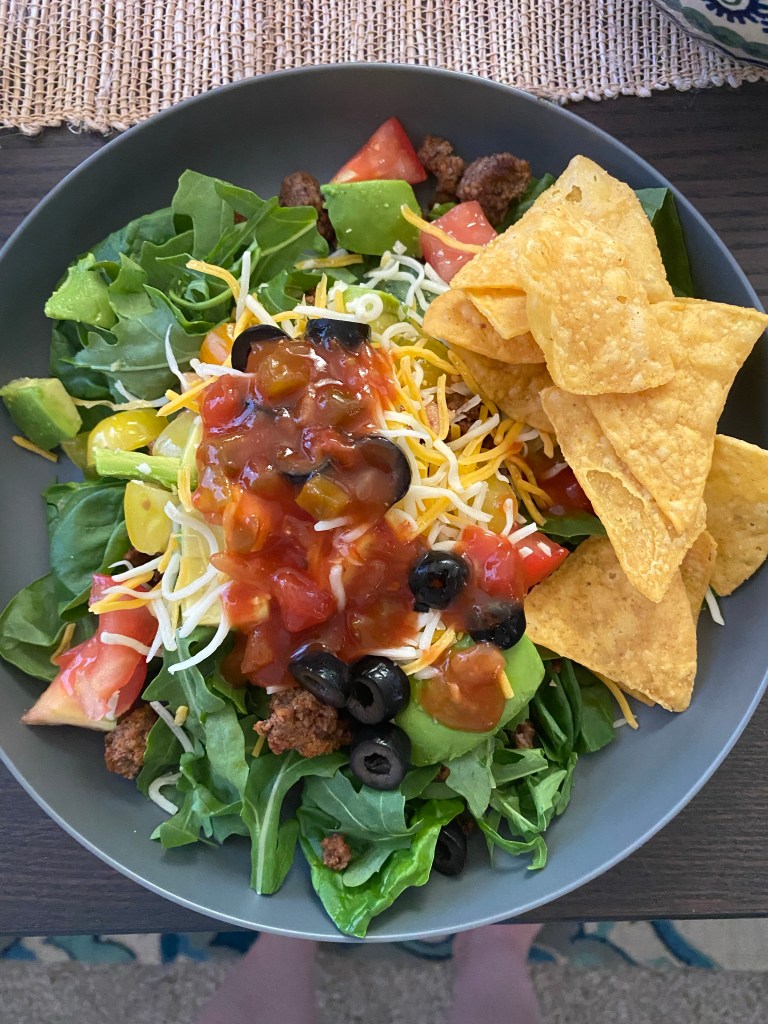
Tuesday: taco salad on spinach. Taco salad and really any dish with the word taco in its name are very popular in my home. I often make taco salad with black beans or meatless crumbles but we opted for ground beef this week. There’s no recipe; we just make a spicy protein and then layer on everything on the fridge.
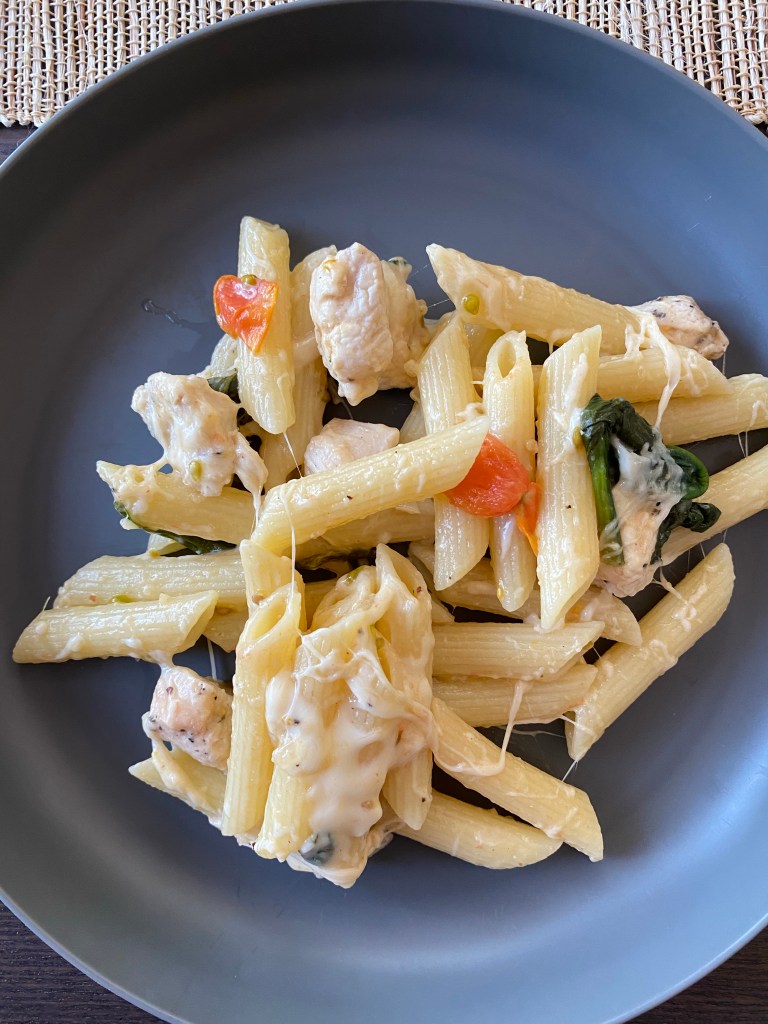
Wednesday: lemon pepper chicken pasta with spinach salad. This one pot meal is one of the easiest recipes in our repertoire and so popular with everyone in the house. The dish can be made with vegetable broth instead of chicken broth and with chicken-flavored strips instead of chicken for a vegetarian spin.
Thursday: pizza salad. This is a simple green salad with olives, marinated artichoke hearts, Parmesan, thick croutons, and your choice of dressing. You can also add pepperoni, prosciutto, or another cured meat to add more flavor. Children love this salad even in homes like mine where pizza is on the menu regularly.

Friday: homemade pizza with veggies that need to be used. Fridays are usually a “clean out the fridge” evening when we plan a meal that uses the vegetables that are looking limp and sad. I have several recipes that can use almost any vegetables but pizza is certainly the most popular with my kids.
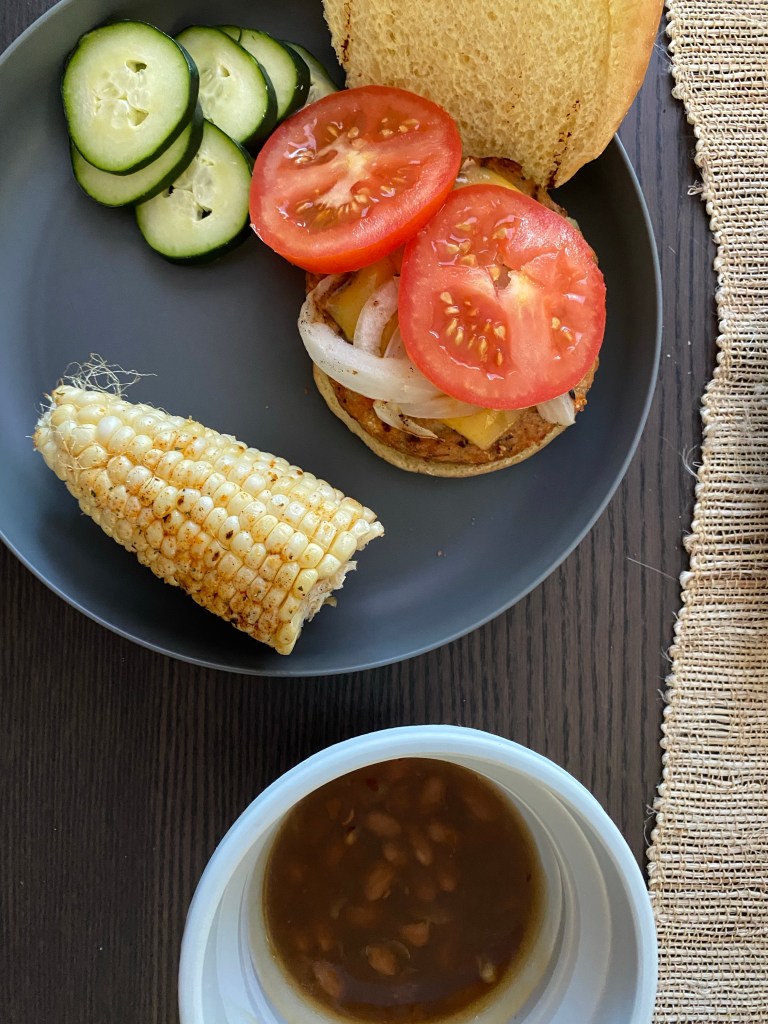
Saturday: veggie burgers with grilled onion, sliced cucumbers, baked beans, and roasted corn on the cob. There are a lot of great options for grilling vegetarian foods but veggie burgers are a fan favorite with my children.
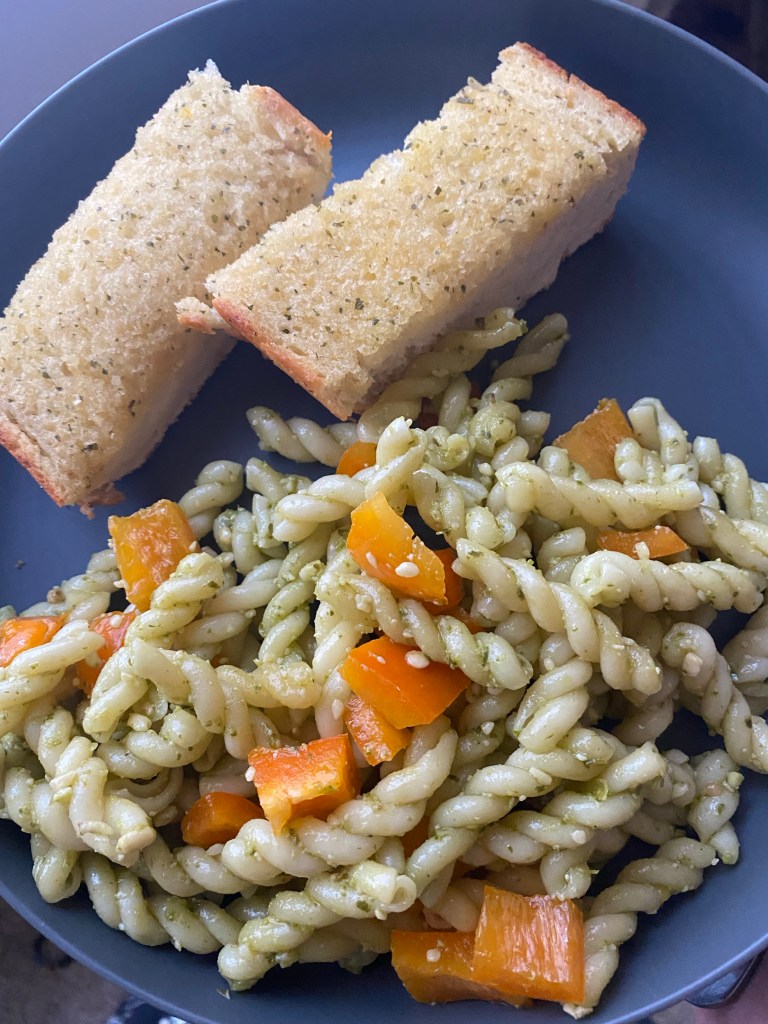
Sunday: pesto pasta salad with garlic bread. Pesto pasta salad is another easy way to use up almost any vegetable. We put cut up yellow bell pepper and cherry tomatoes in this week’s version. The rest is just plain green pesto and whatever noodles were on sale.
Monday: lentil stew over mashed potatoes. My family is not fond of lentils except in stew dishes. Even then they are somewhat reticent. However, lentils are so cheap and healthy that I just have to try to serve them occasionally. We make this stew without potatoes and then serve it over mashed potatoes.
Tuesday: Caribbean spiced chicken tacos with mango salsa and coleslaw. We use the Trader Joe’s Cuban-style citrusy garlic seasoning as rub for grilled chicken which is then served with a variety of toppings in corn tortillas. A plain coleslaw and either jarred or homemade mango salsa round out the meal.
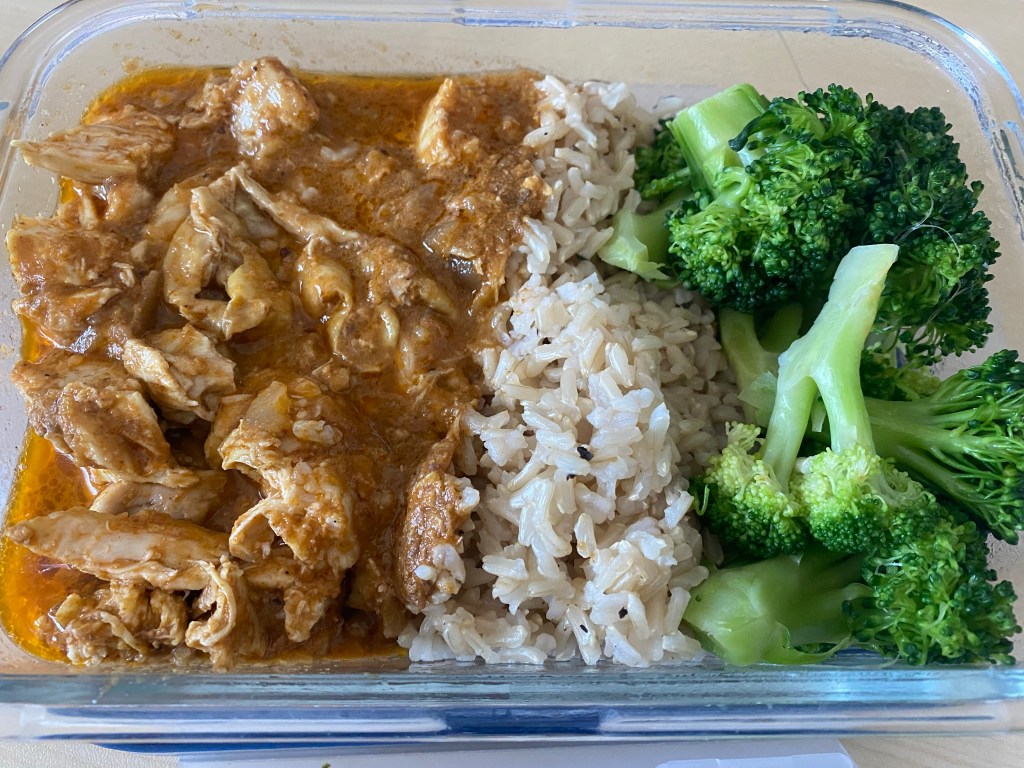
Wednesday: chicken and sweet potato curry over brown rice. We used a jarred sauce for this curry and threw the whole mess in the slow cooker. I am rebuilding my spice selection so we can soon enjoy making our own sauces at home but there’s no denying that this was easy and fast. I love saucy curries because sweet potatoes and starchy vegetables melt into them, so even my picky eaters get an extra serving of veggies.
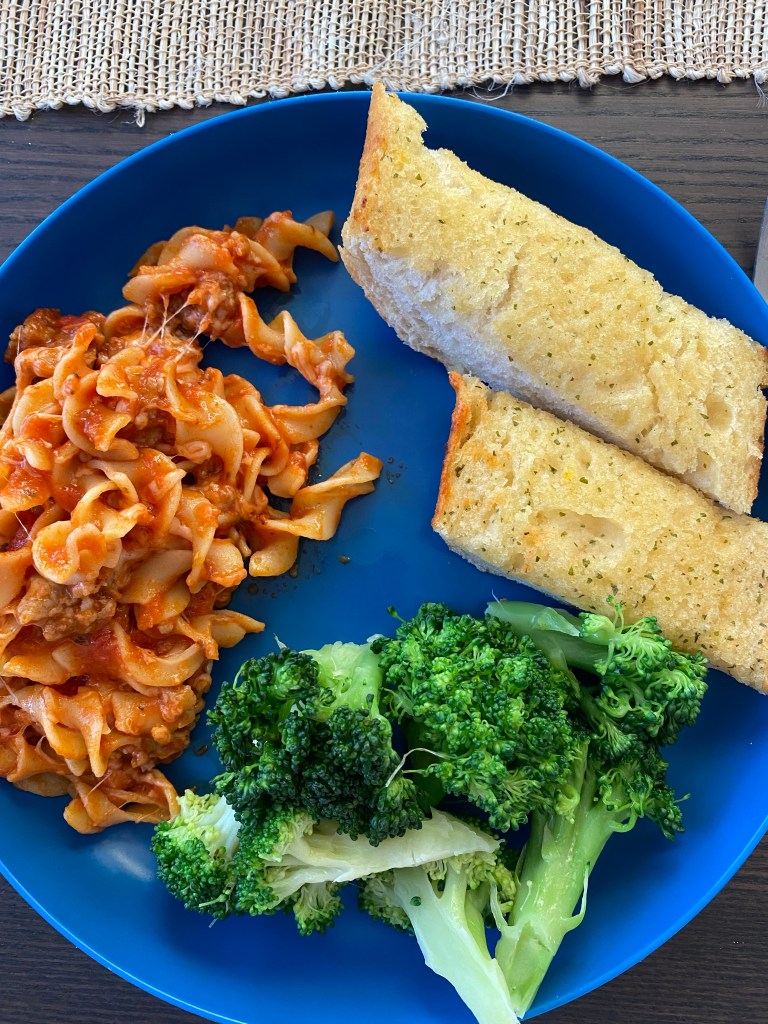
Thursday: stove top lasagna with steamed broccoli and garlic bread. I don’t have a recipe for stovetop lasagna. I just fry Italian sausage and stir in cooked egg noodles, spaghetti sauce, and lots of cheese. It is a very popular dish with my children.
Friday: “Hawaiian” pizza with spinach. Are we still calling pizza with ham and pineapple ‘Hawaiian’? I doubt this is a Hawaiian food but my children love it regardless of the name. I put the ham and the spinach in the same silicone freezer bag and froze them as soon as we came home from grocery shopping so they didn’t get eaten the first week.
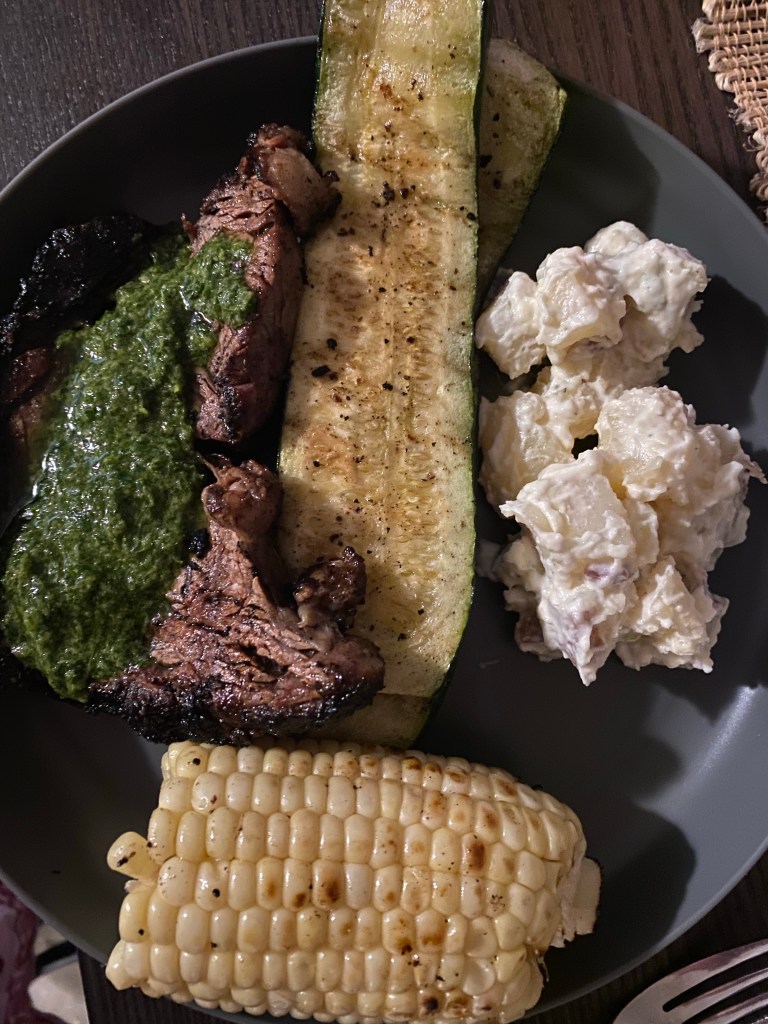
Saturday: grilled ribeye with chimichurri, grilled corn, grilled marinated zucchini, and potato salad. Originally we planned to have chicken but our dinner guests brought ribeye to share. This was a simply delicious meal with tons of leftovers to get us through the next day… which was shopping day!
Reflections
This was our first two week period living in our new area and using this shopping interval. We discovered a few things – that we still need to refill on vegetables and milk between trips, for example.
This plan required prepping and freezing a few items (garlic bread, broccoli, corn on the cob) ahead of time. It also required one trip each to the natural store and farmers market for fresh produce and milk (ice cream and kettle corn also somehow made it in the shopping bag). For the most part, however, our diet was covered by our initial shopping trip.
Because it is such a long drive to the nearest town with reasonable food access, we saved a lot of time and fuel by shopping less often. Win!
We ate more meat than usual over this two weeks, in part due to lazy planning and part due to houseguests. We will return to our regular eating habits next week.
But what did this actually cost? I’ve always heard that shopping for food every two weeks saves money but that never made sense to me. Aren’t you still eating the same amount of food? This will need more study but did appear to spend less somehow. We spent $275 on food at the beginning of the two weeks, another $50 on our unexpected grocery runs, and also used about $25 worth of food from the pantry and freezer. That’s $175 a week for a healthy and varied diet for a family of 6 that includes two young men and a lot of big eaters. The USDA says a family of our size and makeup that eats on their cheapest plan (the “Thrifty Plan”) should spend $247.90 a week. We live in an expensive area and eat well so this is a real triumph!
We definitely have some fine-tuning to do but I now feel more confident about shopping every two weeks. I will report back about how our meal plans are evolving as we settle into our new home and our new routine.
 KidsCatsandFlannel